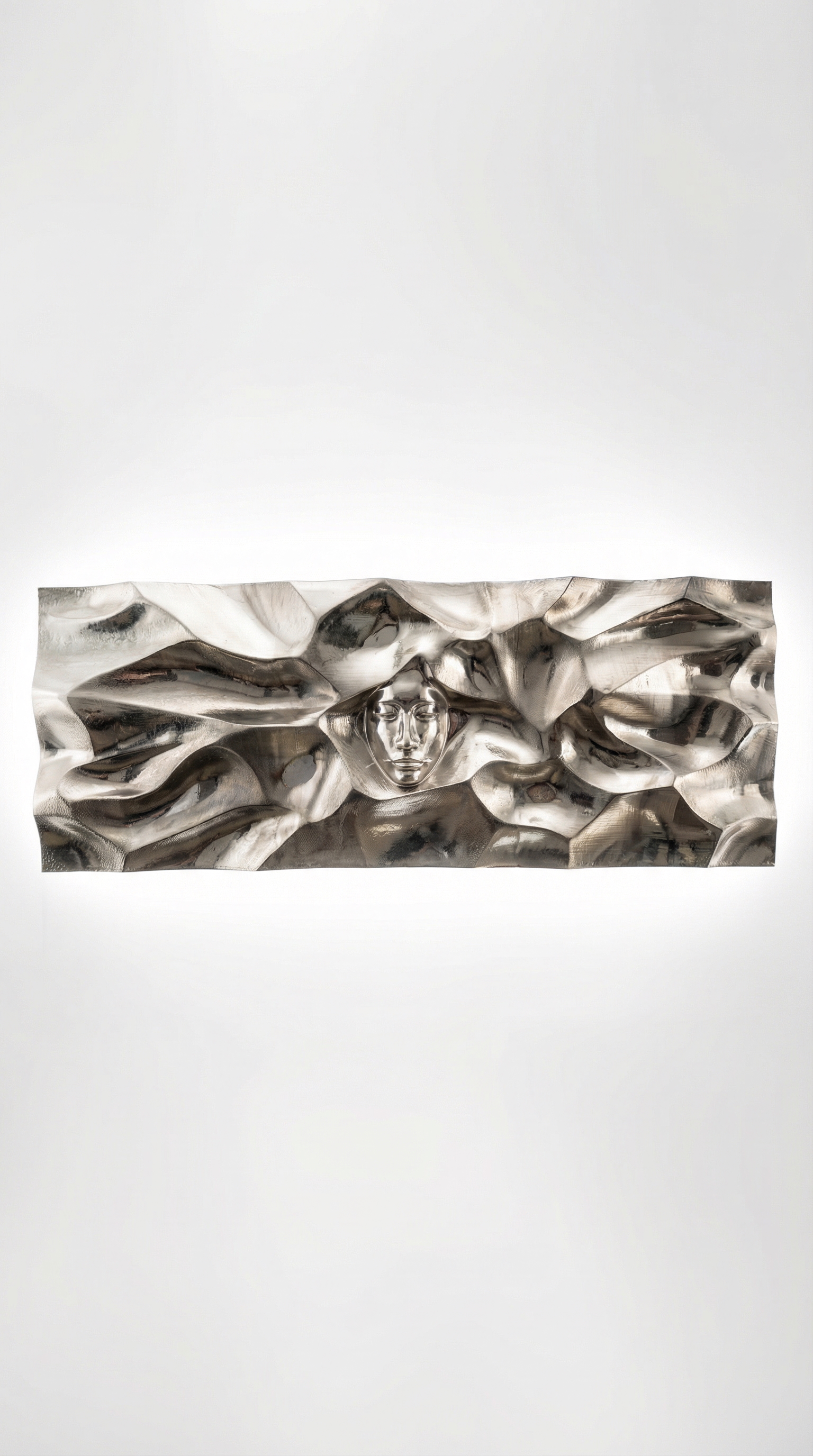
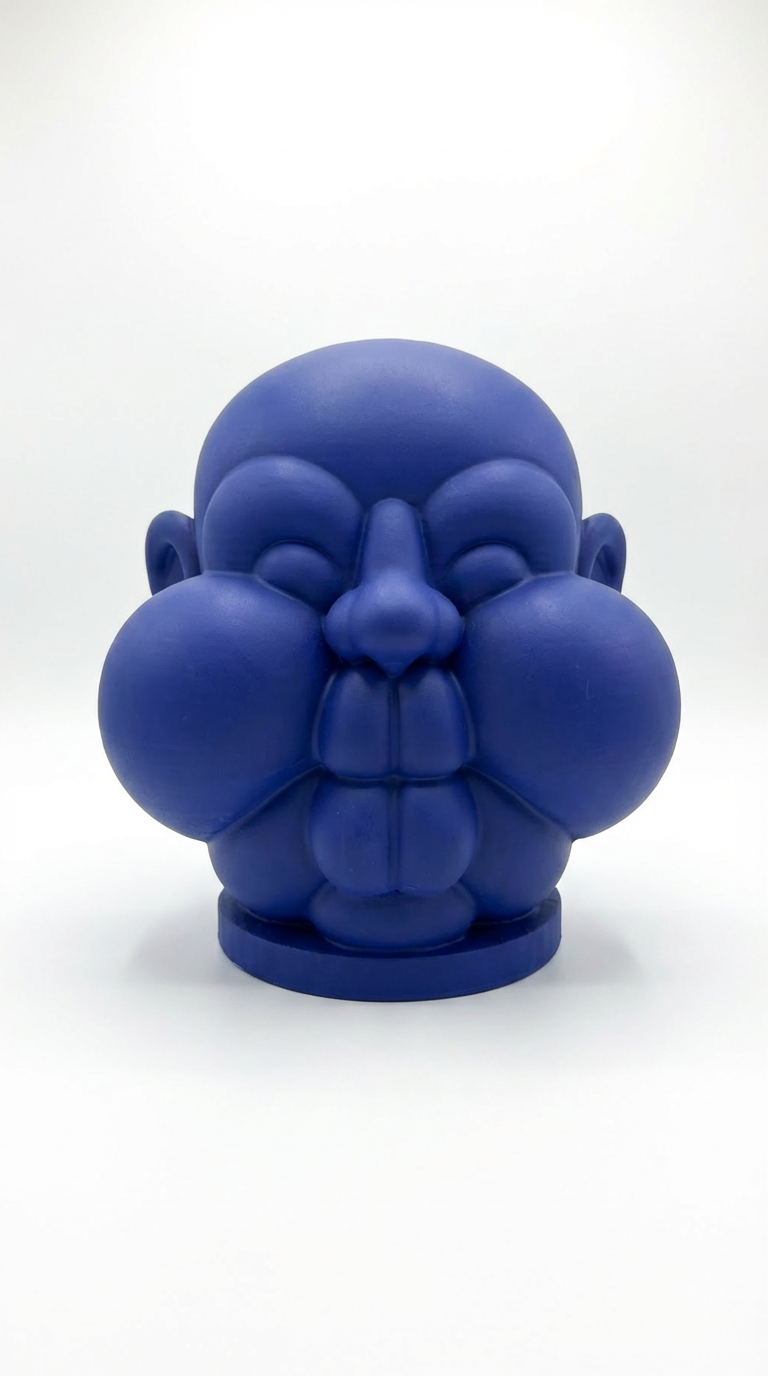
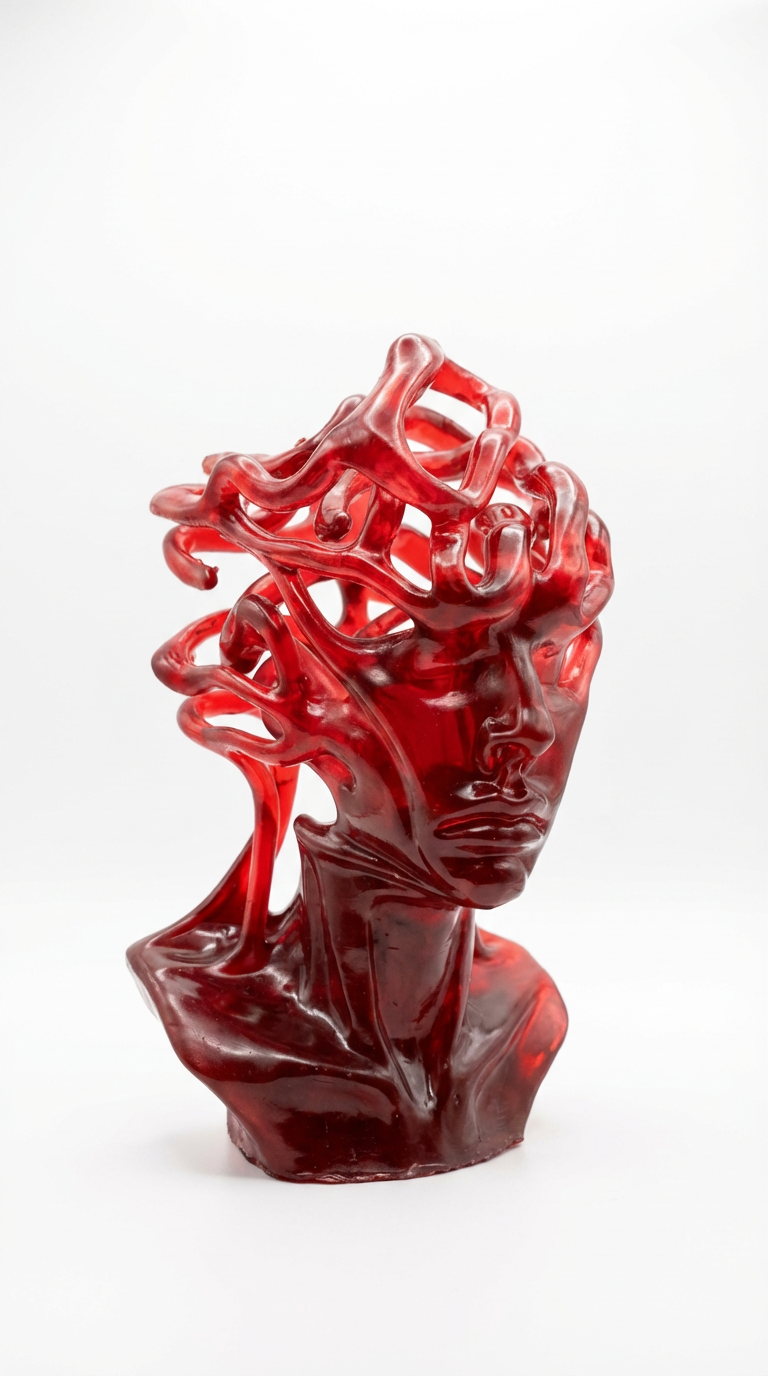
What’s Behind the Simulation? is a chrome mirror that refuses to behave like one. Its surface buckles into liquid folds—like a digital world rendered in high gloss—catching light, space, and the viewer in a constantly shifting reflection. You don’t just look at the work; you appear inside it, fragmented and reassembled by its metallic topology.
At the center, a face emerges—quiet, uncanny, almost born from the distortion. It reads like a human presence caught between realities: an avatar becoming aware, a consciousness surfacing through the sheen of the constructed world. The face functions as a focal point and a question mark, anchoring the viewer’s gaze while destabilizing certainty.
The work taps into the philosophical tension of simulation theory: if our reality is coded, what lies beyond the code? Yet its most radical move is self-referential. The question “what’s behind” is already an act of awakening—proof of a mind capable of doubt, curiosity, and rupture. In reflecting you back, the artwork turns speculation into experience: the simulation doesn’t merely surround you—it stares back, and you realize the observer is part of what’s being observed.