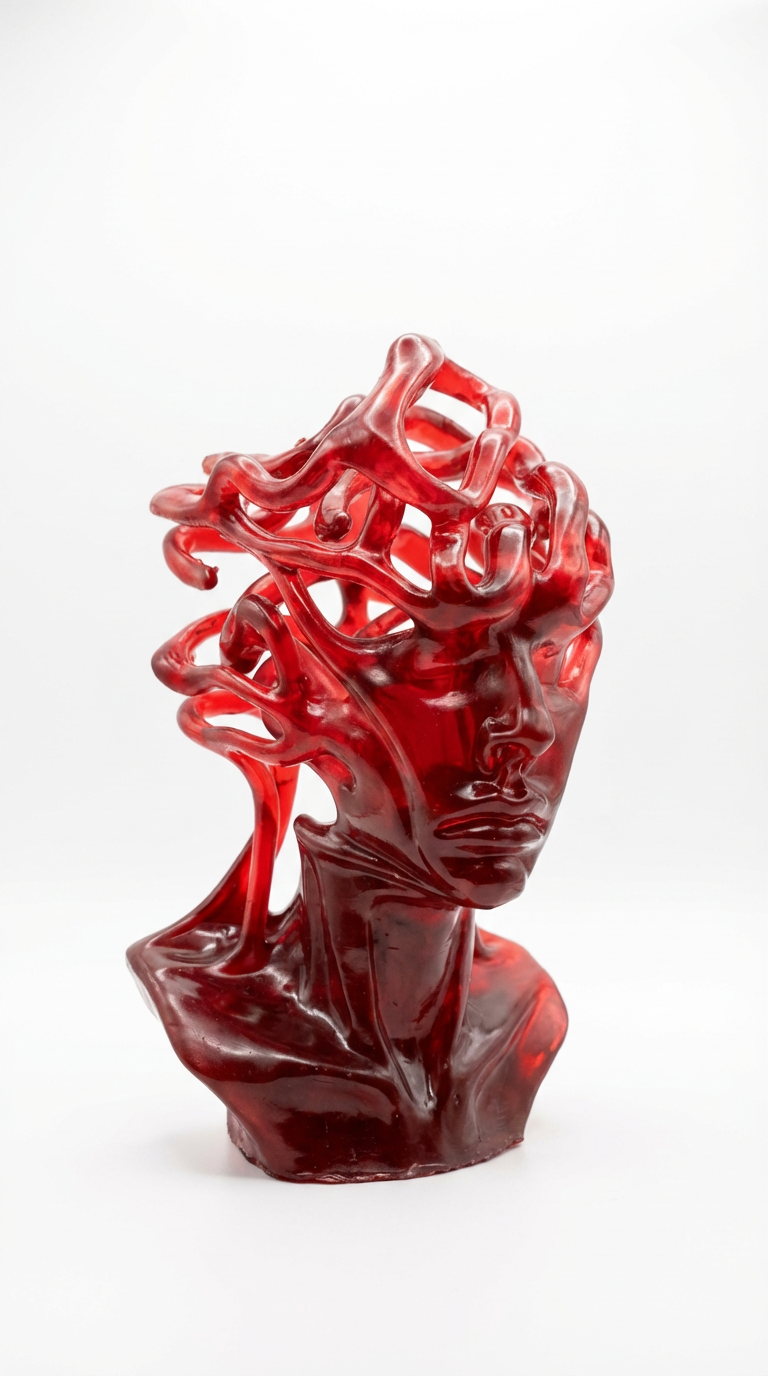
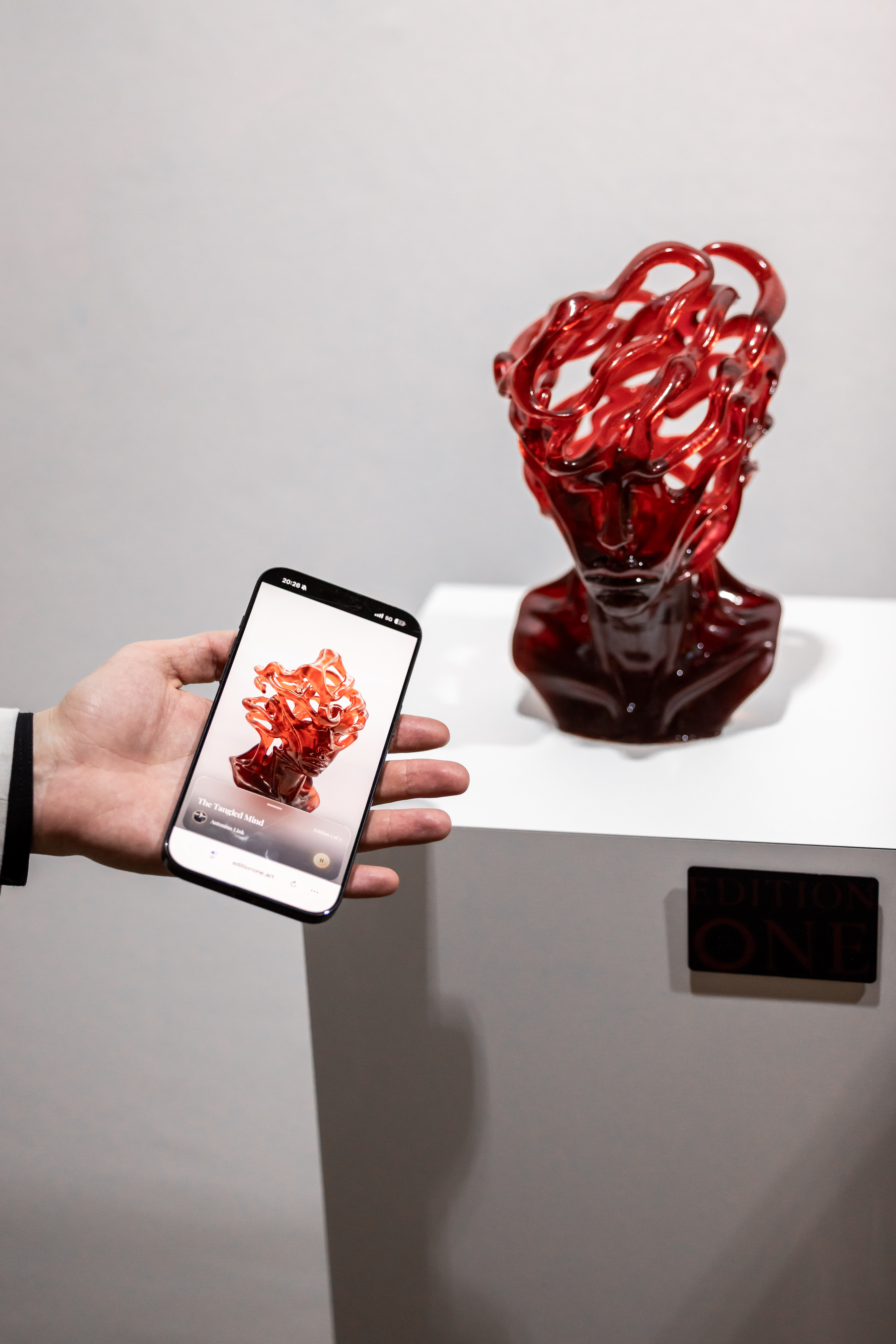
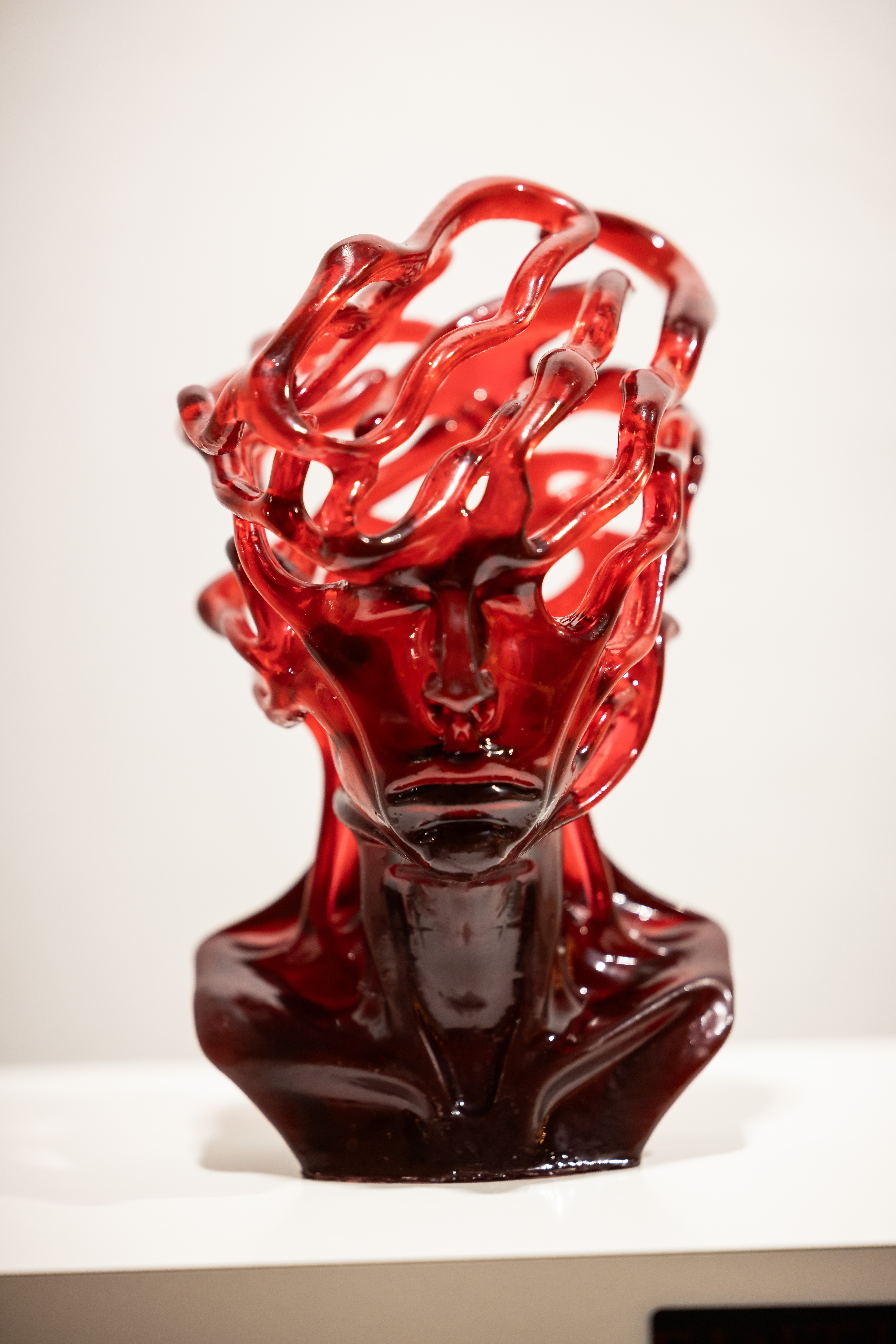
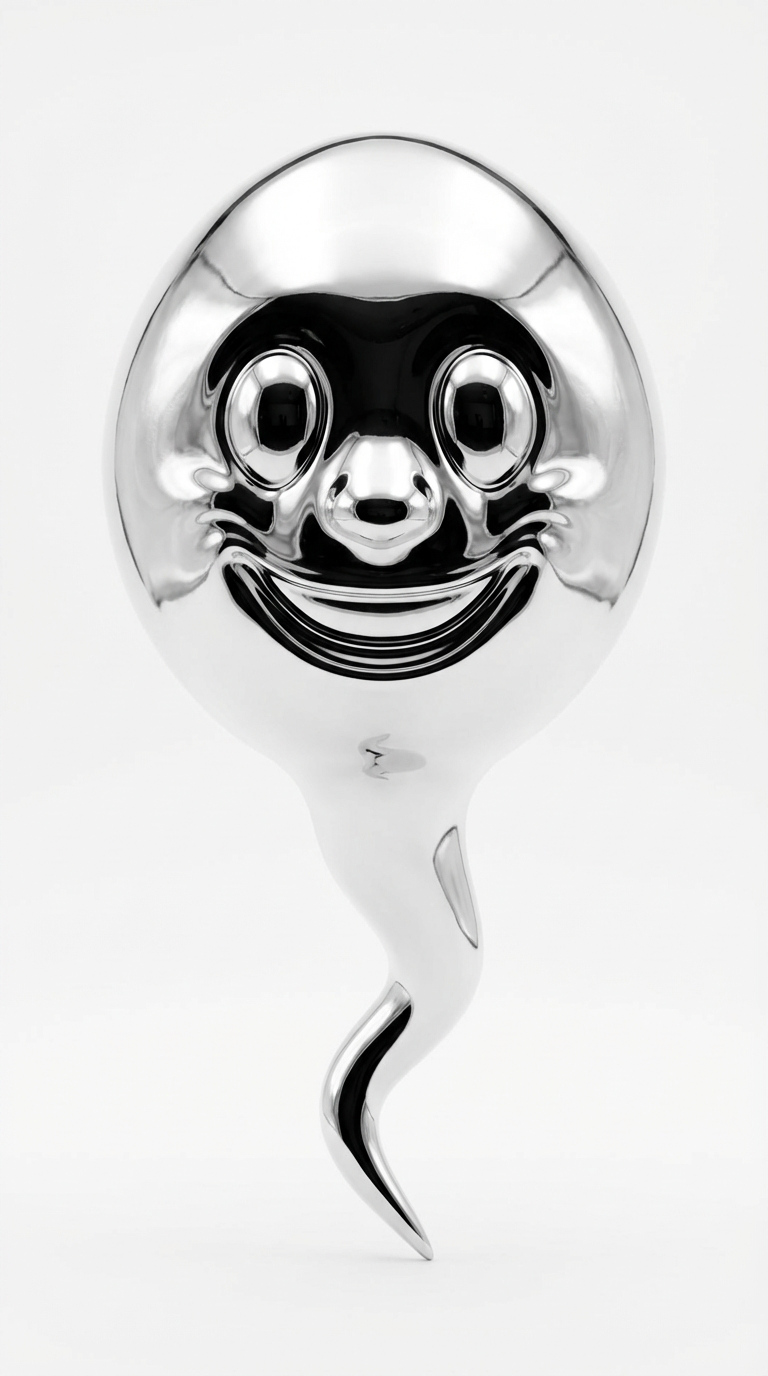
The Tangled Mind presents a calm face beneath a storm of structure. The bust holds a quiet, almost stoic expression, while above it a web of looping forms knots, twists, and folds into itself—an exposed architecture of thought made physical. What is usually invisible becomes material: cognition as entanglement, not clarity.
The sculpture captures the way the mind can move faster than the self. Ideas overlap, memories snag, impulses repeat; meaning forms and dissolves in the same motion. The tangles read like neural pathways and emotional residue at once—proof that thinking is never purely rational, but shaped by pressure, desire, fear, and time. The contrast is the point: outward composure, inner complexity.
The Tangled Mind becomes a portrait of modern consciousness—where attention is pulled in many directions, where the brain is asked to process endlessly, and where stillness often exists only on the surface. It does not pathologize this state; it honors it. The work suggests that even in confusion there is form, and even in overwhelm there is a kind of beauty: the mind’s relentless attempt to hold everything at once.